


Check and prepare
Confirm that the frame, lenses, coatings, and any attached components are suitable for ultrasonic immersion. Remove loose debris carefully before placing eyewear in the tank.
EYEWEAR CARE SYSTEM
Less re-wiping. A deeper cleaning routine.
Couldn't load pickup availability
Secure checkout · Shipping calculated at checkout


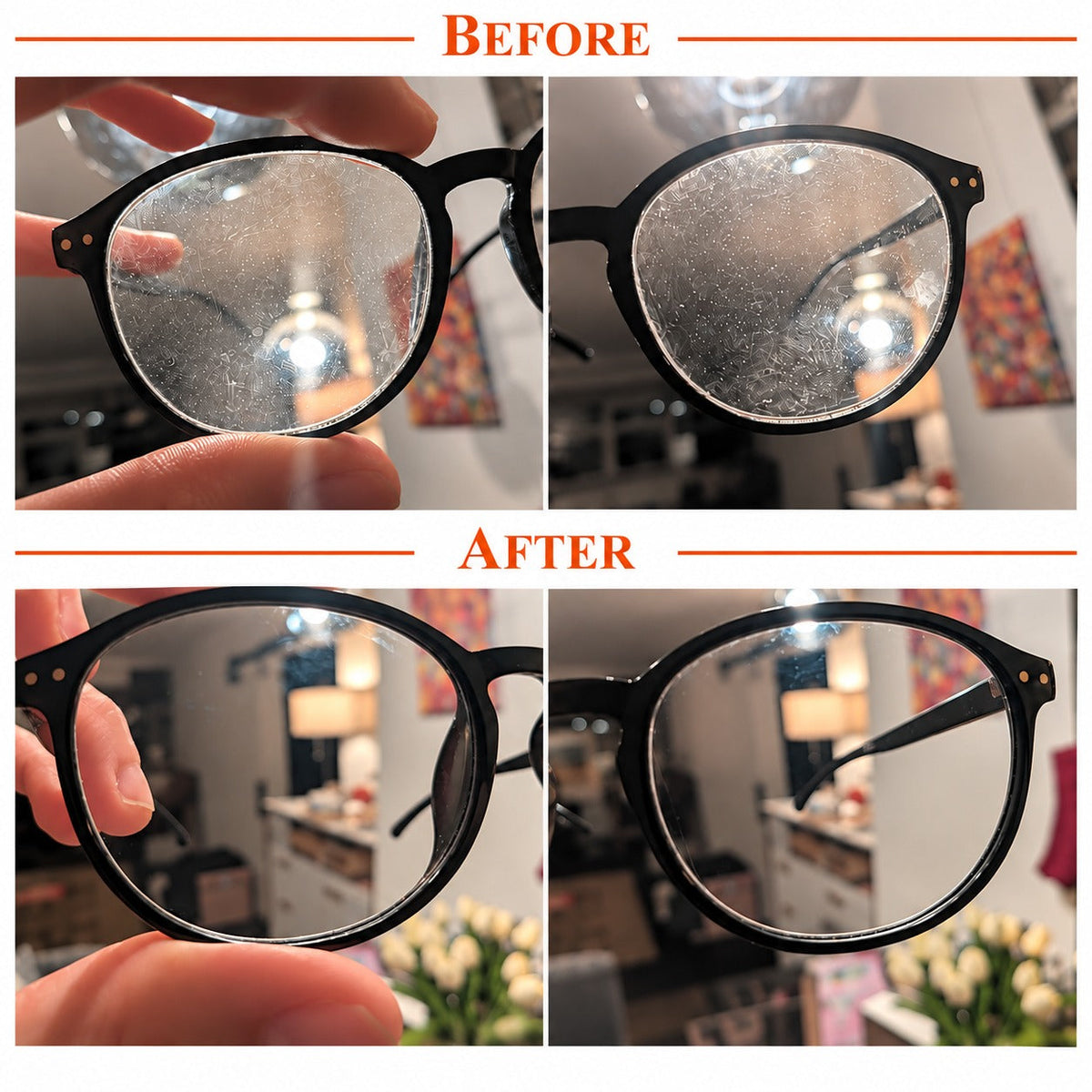
A microfiber cloth is useful for quick touch-ups. But when oils, dust, and product residue collect around lens edges, nose pads, and small frame junctions, wiping the broad lens surface may not reach the whole source of the haze.
That can start a frustrating loop: polish, inspect, find another mark, and wipe again. LensBath is designed as a water-based routine for compatible eyewear, giving tank-exposed surfaces a cleaning step that does not depend on rubbing during the cycle.
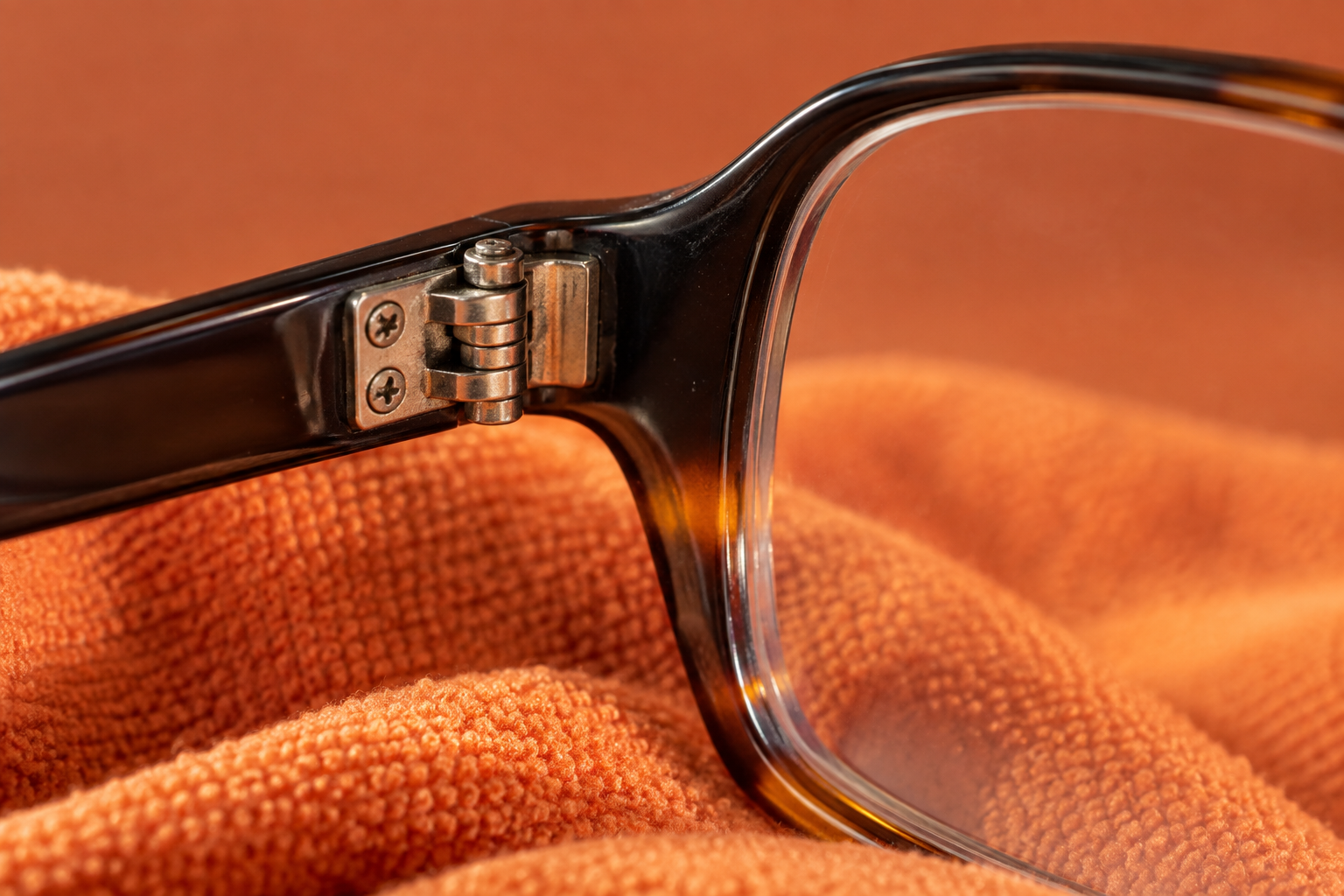
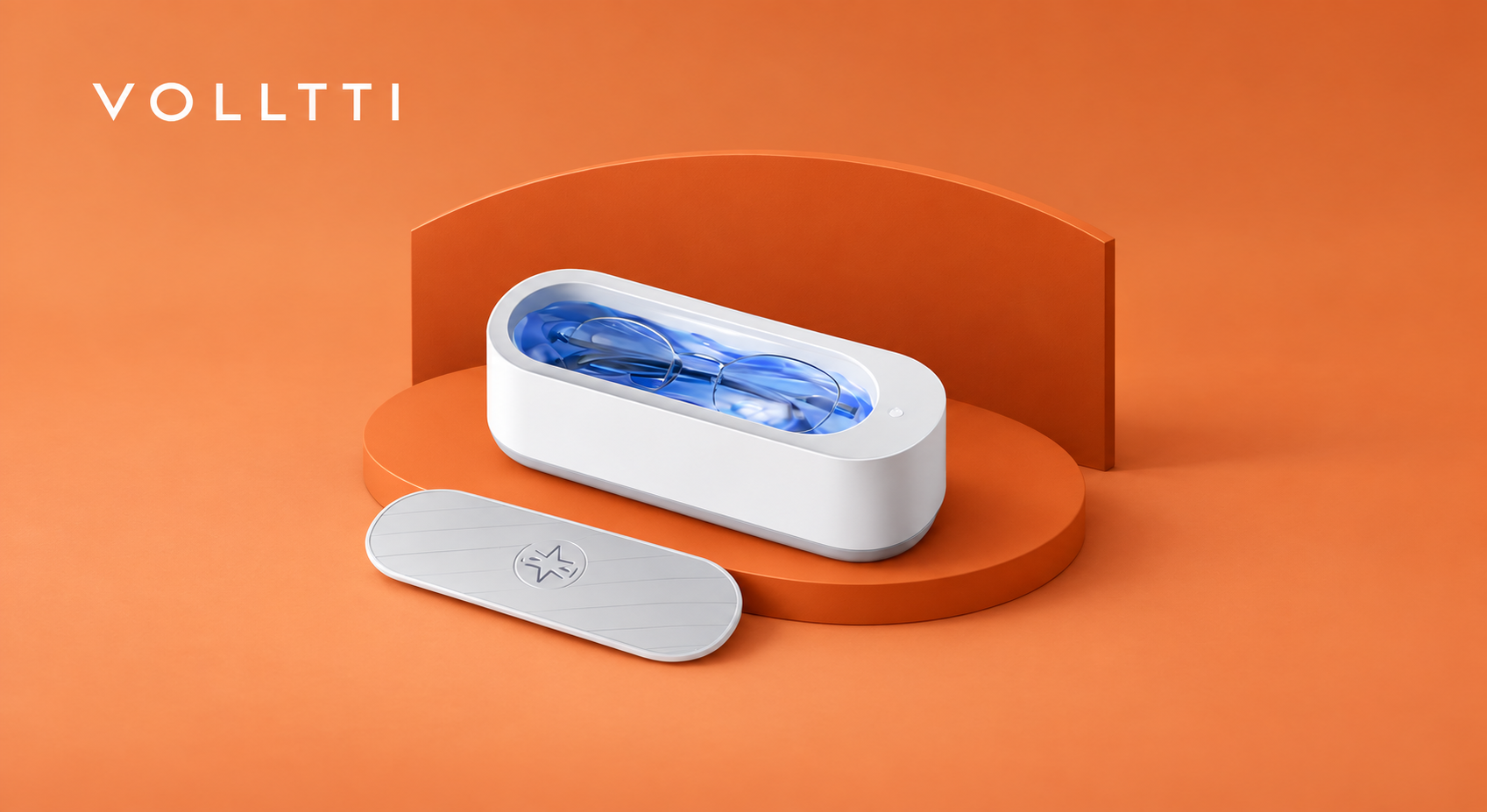
Ultrasonic cleaning uses rapid pressure changes in the water to create and collapse tiny bubbles, a process commonly described as cavitation. In the tank, that water movement can act around compatible surfaces exposed to the bath, including narrow areas that are awkward to address with a flat cloth.
This is a mechanical cleaning concept, not a promise of sterilization or a claim that every material belongs in the tank. The useful difference is the method: water surrounds exposed parts while the cycle runs, with no manual rubbing required during that cycle.
Water around compatible, tank-exposed surfaces.
Repeated finger pressure and rubbing while the cleaning cycle is active.
Frames are three-dimensional objects. Hinges turn, pads meet skin, and lens edges sit close to rims. Those zones can hold residue even when the center of the lens has just been polished.
A bath-based routine is intended to complement careful drying and spot finishing, not make cloths obsolete. The goal is simply to begin with a more complete water-contact step where the eyewear is compatible.




Check compatibility first, prepare the cleaner as directed, then let the water-based cycle handle the no-rub portion of your routine.
Confirm that the frame, lenses, coatings, and any attached components are suitable for ultrasonic immersion. Remove loose debris carefully before placing eyewear in the tank.
Add water and prepare the unit according to its supplied instructions. Position compatible eyewear without forcing it, close the lid, and use the one-button control.
Lift eyewear out with clean hands, inspect it, and dry it with a clean, suitable cloth. Water cleaning and careful drying work as parts of the same routine.
This is not a contest between tools. A cloth is excellent for portable spot cleaning; a compatible ultrasonic bath adds water contact around more of the object.
| Routine question | Microfiber cloth | LensBath water-based cycle |
|---|---|---|
| Best suited to | Quick fingerprints and drying after a wash. | A more involved cleaning step for compatible eyewear. |
| Contact method | Direct wiping across reachable surfaces. | Water movement around compatible surfaces exposed in the tank. |
| Narrow details | May require careful folding and repeated passes. | Water can contact edges, pads, and frame recesses that sit within the bath. |
| Still needed afterward? | A clean cloth remains useful for careful drying. | Yes. The bath is a cleaning step, not a complete drying method. |
Results depend on residue type, preparation, eyewear construction, compatibility, and drying technique.
Good care starts with the material in front of you. When coating or frame compatibility is uncertain, check the eyewear maker's guidance before immersion.
Keep the routine practical, and treat compatibility as the first step rather than an afterthought.
No universal compatibility claim is made. Check the lens, coating, frame, adhesive, decorative element, and eyewear manufacturer's care guidance before ultrasonic immersion. Ask a qualified optician when uncertain.
No. Cleaning may remove residue that makes a surface look hazy, but it cannot repair scratched lenses, damaged coatings, or worn frame materials.
A clean, suitable cloth remains helpful for careful drying and quick touch-ups. LensBath is designed to add a water-based cleaning step, not eliminate every other care tool.
No rubbing is intended during the active cleaning cycle. Follow the supplied preparation and placement directions, then dry the eyewear carefully after removal.
No sterilization, disinfection, or bacteria-removal claim is being made for this product. It is presented as a mechanical, water-based cleaning routine.
Residue may remain on the cloth, at lens edges, or around pads and frame recesses. A later pass can move a small amount back onto a broad surface. That can happen, but it does not mean microfiber cloths always spread dirt.
Choose one LensBath for $47.00 or two for $65.00. Confirm that your eyewear is compatible before use.
Choose your bundle